Firefighters call for transparency and warn Normal council of slower response times with station relocation
Written by Bella Marello on January 21, 2026
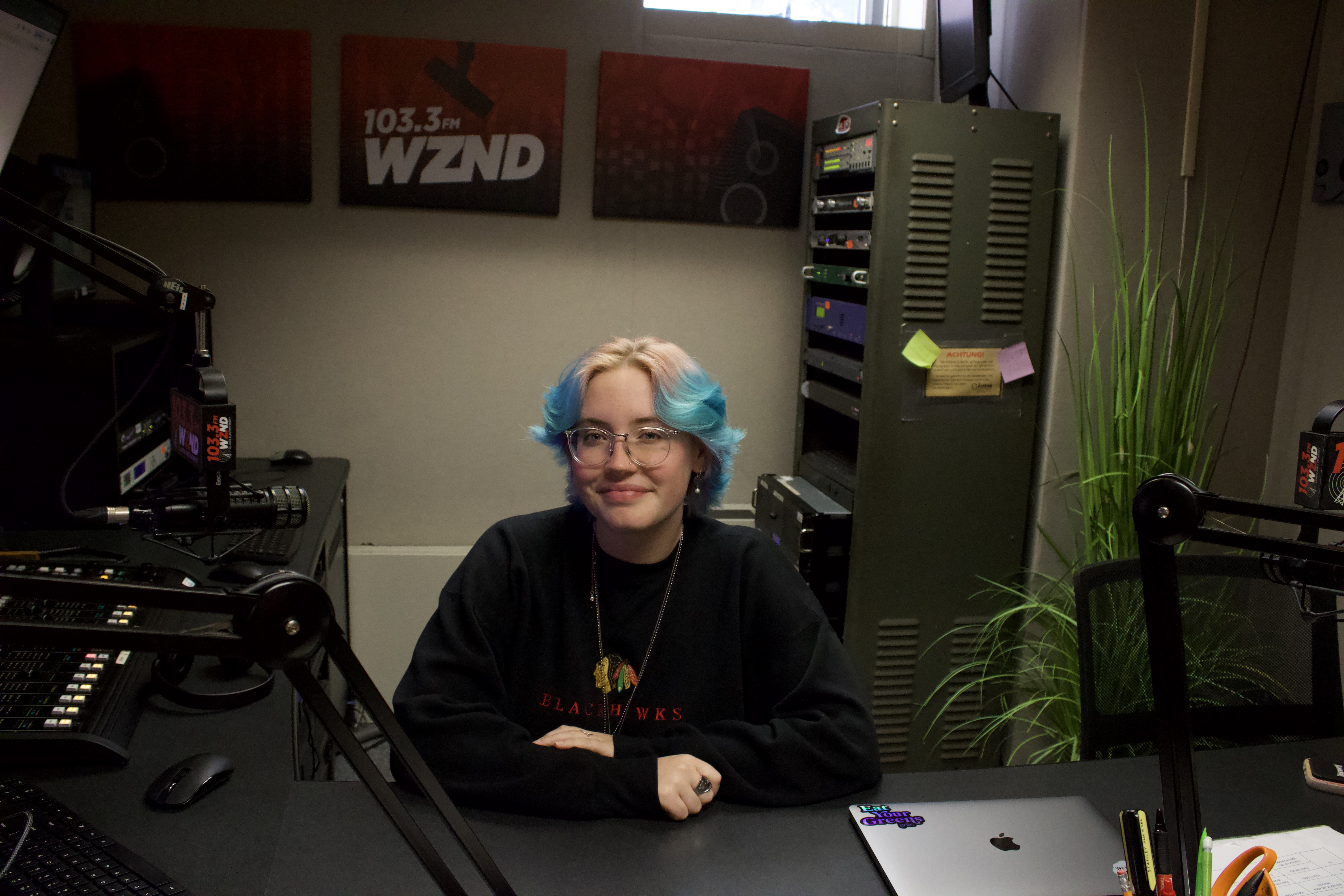
Image taken by Bella Marello
NORMAL, Ill. – The Normal Town Council faced some strong criticism from the community Tuesday during its biweekly town council meeting, with five public speakers urging the council not to relocate Normal Fire Station No. 2.
Associated Fire Fighters of Illinois President Chuck Sullivan emphasized that the association found in its updated fire station location study that fire response times in Normal would increase from roughly four to six minutes with the relocation.
“As a state association and as Local 2442, we deal in facts,” Sullivan said. “This is not fear-mongering. I want to make that clear. This is not fear-mongering. This is not an attempt by the AFFI to gain more members.”
The AFFI represents more than 18,000 professional firefighters and paramedics in 238 locals across Illinois.
“The AFFI as a state association is not out promoting willy-nilly expanding fire stations or personnel,” Sullivan said. “What we are simply suggesting to you tonight is that, after very deliberate and time-consuming research and an updated fire station location study with superior computerized models using GIS, the town of Normal is providing a less than adequate deployment of stations and personnel.”
AFFI Vice President Chris Coats has been a professional firefighter in Pekin, Ill., for 26 years and spoke to the council to publicly state that the association did not bring up station relocation in its most recent negotiation because the Illinois Public Labor Relations Act does not allow management-type rights, such as station relocation, to be included in collective bargaining agreements.
Coats said the firefighter union has requested labor-management meetings in the past but received no response.
“All they really want is a seat at the table, to have a discussion,” Coats said. “Unfortunately, to this point, they haven’t had the ability to be able to have those comments, so I’d respectfully ask that you consider having a conversation with them.”
International Association of Fire Fighters Local 2442 member Blake Chaulcy said National Fire Protection Association 1710 sets four minutes as the standard response time for a career fire department.
“The NFPA, an internationally respected, century-old organization, does not set that number arbitrarily,” Chaulcy said. “It is based on extensive research from organizations such as the National Institute of Standards and Technology, UL Fire Safety Research Institute and the American Heart Association showing that outcomes for both fire and medical emergencies are significantly better when response times are within four minutes.”
“When you’re talking about a fire, a fire doubles in size every 30 seconds,” Coats said. “So when these members are talking about how important it is to have this response time and be as close to that four-minute response time as possible.”
Chaulcy also drew attention to the town’s lack of public modeling or documentation.
“We have seen no administrative planning documents, no aggregate reports and no detailed analysis to review,” Chaulcy said. “Instead, we have been given an FAQ-style summary that selectively highlights more than a million data points without letting anyone see how they were actually used.”
According to Chaulcy, the local attempted to obtain the information cited in the town’s FAQ-style summary through a FOIA request, a formal request under the Freedom of Information Act, but was denied.
Chaulcy also criticized the town for not releasing planning documents until after the union released its community needs study. He highlighted a portion of the planning documents stating the local requested resources costing $100 million over 10 years and said the local made no such request.
“Those numbers are based on recommendations in the study, not demands,” Chaulcy said. “Our actual request is simple: to work collaboratively with the town and help plan responsibly.”
International Union of Operating Engineers Local 49 President Eric Hall questioned why the council approved a “premium” underpass plan instead of a more “modest” at-grade crossing but did not dedicate the same funding and attention to emergency response.
“When it comes to emergency response and public safety, when it comes to the safety of our families in our neighborhoods, residents are expected to settle for less,” Hall said. “That inconsistency should alarm everyone. Public safety is not negotiable.”
Hall ended his public comment with a statement to the community.
“Local government only works when elected officials remember who they answer to,” Hall said. “Transparency and public safety are not favors to be granted. They are obligations. When a mayor and council refuse to listen, refuse to share information behind their decisions and refuse to put public safety first, they forfeit the trust of the people they serve. At that point, our silence is not an option. It becomes our responsibility to hold them accountable and replace them with leaders who will.”
The final public speaker, Normal resident Nikki Stapleton, said she knocked on doors around her neighborhood and collected four pages of signatures opposing the station relocation and left the petition on the table for the council.
Stapleton said most residents she spoke with had no idea the new station location would replace Normal Fire Station No. 2, believing it would be an addition.
After public comment, council member Kathleen Lorenz thanked speakers and urged her colleagues to agree to a work session with firefighters.
“I will once again ask for what I think others said so eloquently tonight, and that is that we sit down and have a conversation,” Lorenz said. “Invite the firefighters, the representatives of Local 2442, to be at the table, to share the data from the town and their study, and be civic leaders.”
“I’m asking, I think I’m at this point, begging for a work session,” Lorenz said.
Council member Andy Byars proposed an updated third-party study to compare findings from the town and the union.
“We could put that side by side with the one the union has authorized,” Byars said. “Look at the methodology in both, look at the outcomes in both, and maybe we’ll find there’s a lot of overlap, or maybe we’ll find differences and can rectify those. More data is a good thing.”
The Normal Town Council meets on the first and third Monday of each month. The next meeting is scheduled for Feb. 2 at 7 p.m. on the fourth floor of Normal City Hall.